Cabin literature

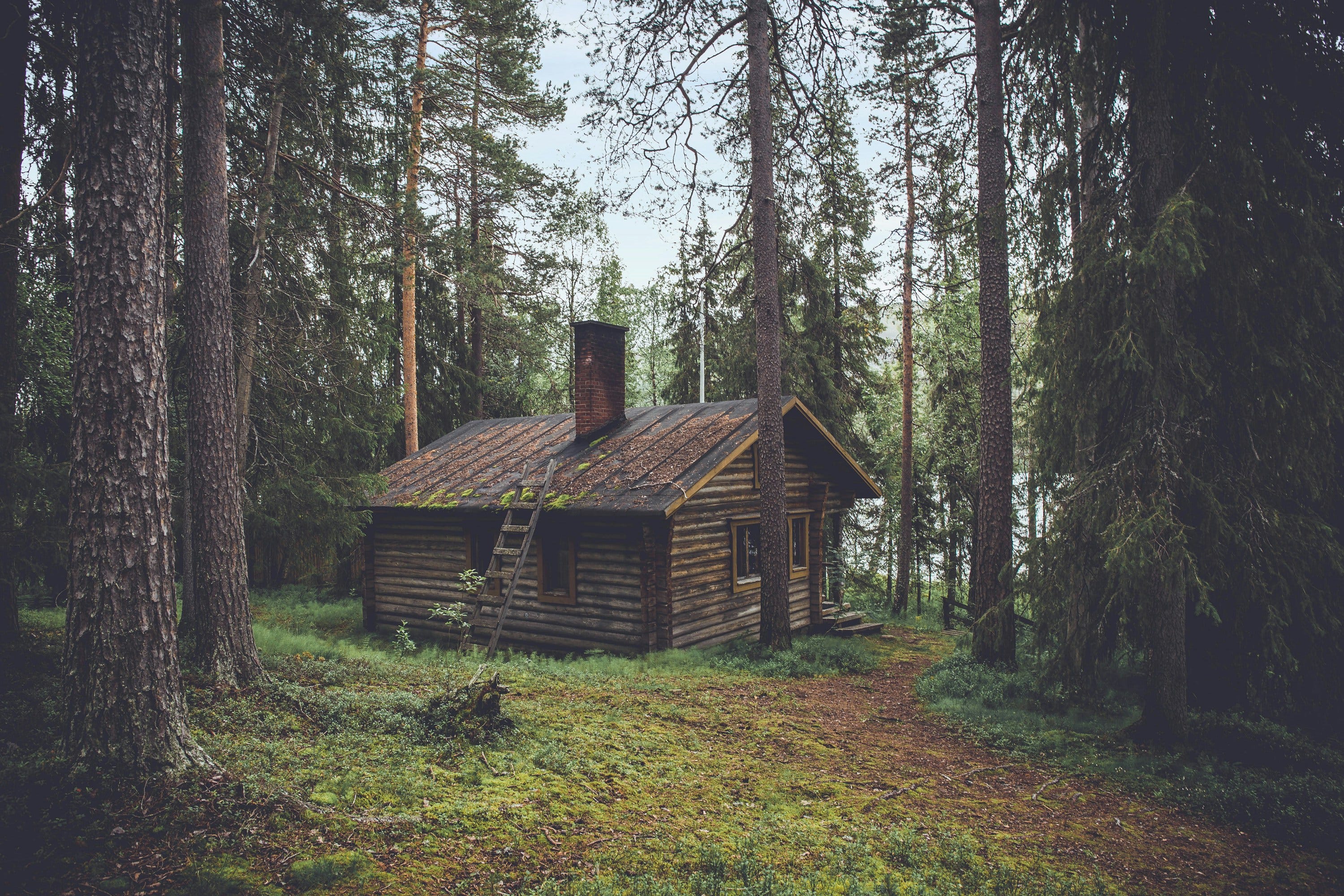
My biggest fantasy is to be a cultured mountain man. I want to pursue a self-sufficient lifestyle in a cabin, but I want to remain educated and well-read.
I suppose I could accomplish this fantasy. I already own a cabin in Appalachian Ohio. The only radio station you can pick up is a bluegrass station out of West Virginia. But that cabin is communally owned by my entire family, and it would be rather selfish to claim it for myself.
My fantasy will probably always remain just that, a fantasy. But it got me thinking: what should the ideal cabin library look like? Everyone would have a different answer of course. Mine would include everything from sprawling epics to comic strip collections. From uproarious comedies to haunting thrillers. Here are my selections. Your mileage will vary:
Deliverance by James Dickey
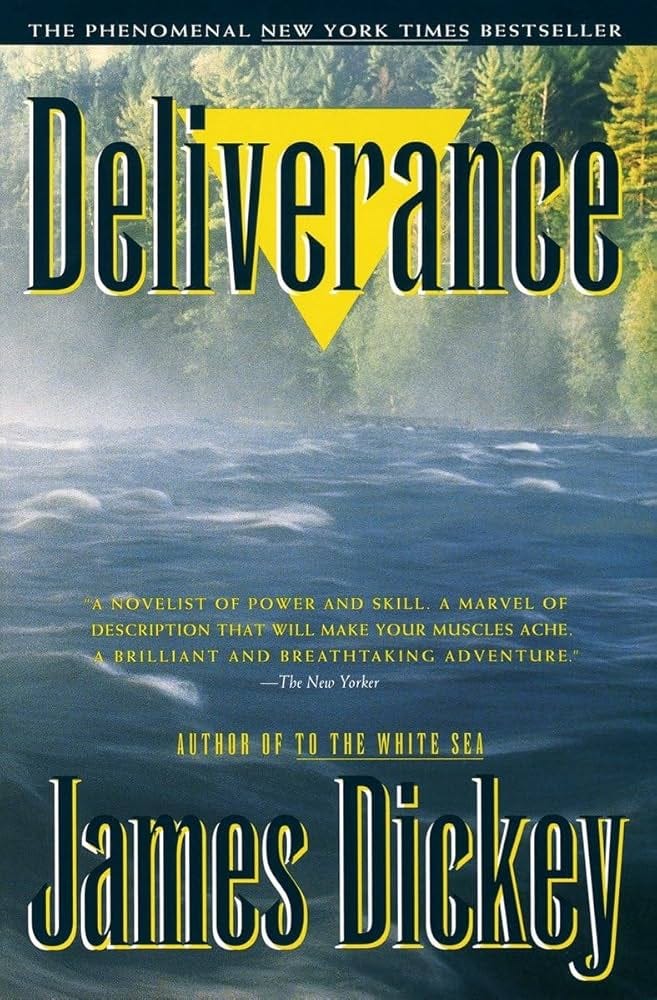
Deliverance is one of my father’s favorite films. A former river guide who had to deal with obnoxious tourists on a daily basis, the film was likely a very cathartic watch. Then again, he attended high school in Merlin, Oregon, so he probably thought it was a documentary.
As disturbing as the film is, the novel is somehow even worse. Deliverance is a tale of so-called “civilized” individuals reverting to primal savagery once removed from the burdens of society. The novel is narrated by Ed, which means, unlike the movie, we get to witness this psychological deterioration firsthand. It’s implied that this “primal savagery” was always there, and was waiting for the perfect catalyst to emerge.
A central theme of the novel is arrogance. Man’s arrogance towards nature results in one dying and the other breaking a leg. The condescending attitude urbanites hold towards rural folk ends in a violent act of sodomy. According to Dickey’s son, the novel is an allegory for the Vietnam War, making it a commentary on American arrogance as well.
For better or worse, Deliverance popularized the “hillbilly horror” trope, which has forever altered the perception of rural America.
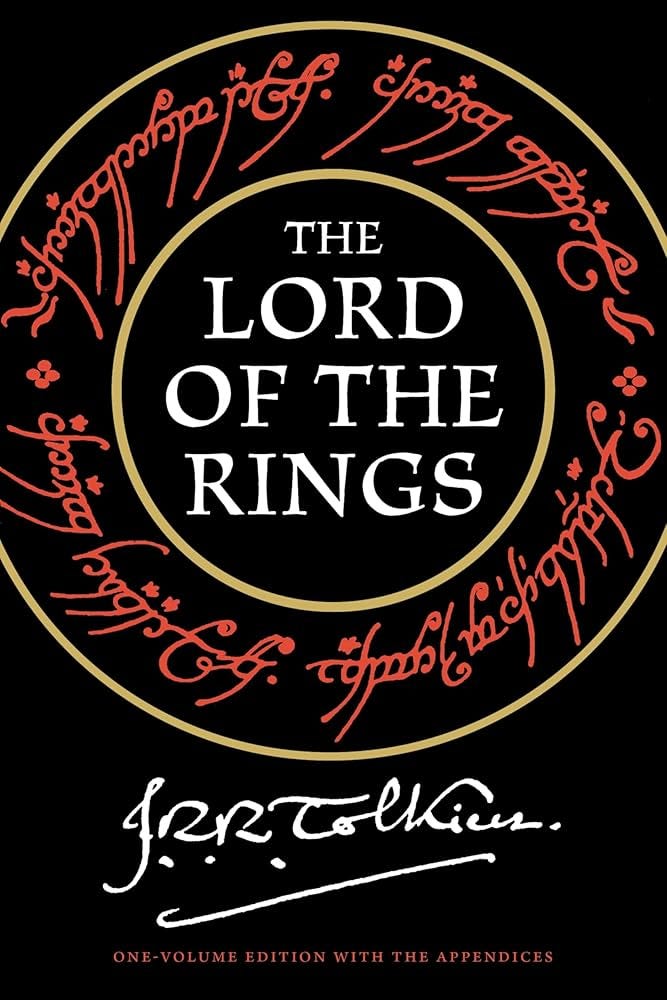
The Lord of the Rings by J.R.R. Tolkien
Three Rings for the Elven-kings under the sky,
Seven for the Dwarf-lords in their halls of stone,
Nine for mortal men doomed to die,
One for the Dark Lord on his dark throne
In the Land of Mordor where the Shadows lie.
One Ring to rule them all, One Ring to find them,
One Ring to bring them all and in the darkness bind them
In the Land of Mordor where the Shadows lie.
If you’re going to be spending a considerable amount of time in a secluded cabin, you’ll need a couple sprawling epics to keep yourself occupied. This is Sprawling Epic #1. It’s not just a fantasy novel, it’s the fantasy novel. It draws inspiration from Old Norse sagas, Anglo-Saxon folklore, and Celtic myths, intended as a mythic prehistory of Europe. It also gave Tolkien an excuse to use the new languages he invented. Although many have interpreted the book as an allegory for the Second World War or Tolkien’s religious beliefs, Tolkien himself has vehemently denied such claims.
Tolkien is known for his attention to detail. Every ruin the Fellowship passes has its own backstory spanning centuries. Tolkien won’t just say “they walked through the forest,” he will describe the species of trees, the light filtering through the canopy, and the sounds of birds. This slow, meditative pace matches the cabin atmosphere perfectly.
While The Lord of the Rings contains many themes, the largest one is temptation. The most powerful heroes like Gandalf and Galadriel refuse to wear the Ring, for they would sucummb to its temptations and become the next Dark Lord. Ultimately, the day is saved not by the wizard Gandalf or the warrior Aragorn, but by two Hobbits. Hobbits were chosen because they were simple folk and lack the ambition the Ring preys upon, therefore being less susceptible to its temptations. Just goes to show that anyone is capable of being a hero.
Also, Tolkien apparently made the whole thing up as he went along (except for the climax at the Crack of Doom). Maybe there’s a lesson in that: don’t overthink it, just write.
Patrick McManus
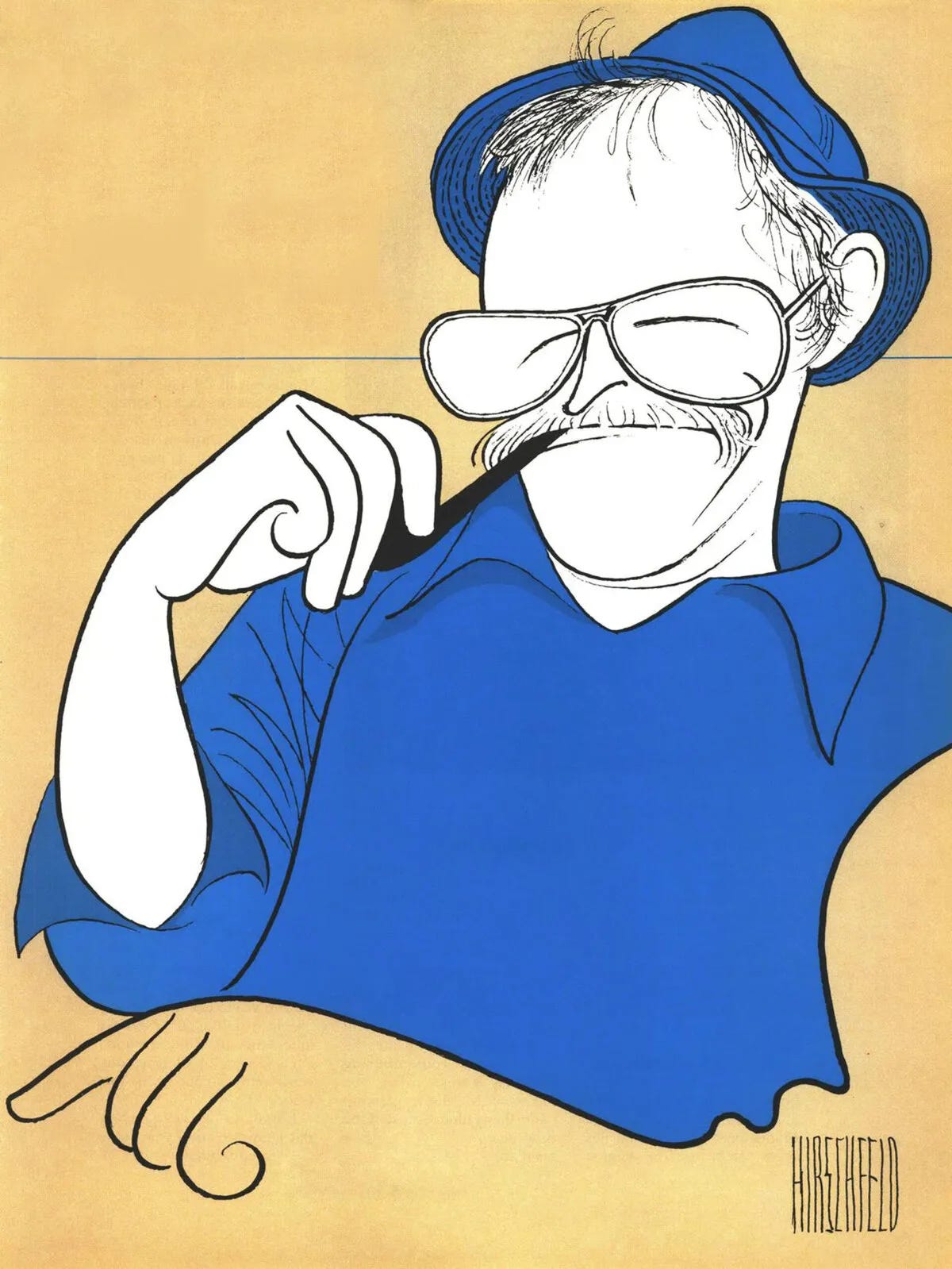
What do you get when you combine the tall tales of Mark Twain with the dry humor of Robert Benchley and the heavy wordplay of S.J. Perelman? You get Patrick McManus, one of the funniest men who ever lived.
McManus was a columnist for Outdoor Life and Field & Stream. He primarily wrote about outdoor activities such as hunting, fishing, and camping - namely, his own ineptitude at said activities. His stories have been reprinted in several book collections, the first of which is titled A Fine and Pleasant Misery. That pretty much sums up his outlook on the outdoors: a camping trip where everything goes right is boring and forgettable, whereas a camping trip that devolves into a complete disaster will make for a legendary story later on.
McManus also frequently provided highly-exaggerated anecdotes about his childhood in Sandpoint, Idaho, referred to as “Blight” in his stories. His stories feature a recurring cast of characters, the most prominent of which was Rancid Crabtree, a local mountain man who considered bathing a dangerous health hazard. Because Pat’s father died when he was six, Rancid often takes on the role of a father figure. He may also have planted the seeds of my mountain man fantasy. Other recurring characters include his childhood best friend Crazy Eddie Muldoon, his older sister Patricia (who goes by “The Troll” in his writing), and his slovenly dog Strange.
Throughout the American West there are small, pastoral towns, surrounded by mountains and located on the doorstep of the wilderness. Sandpoint, Idaho. Grants Pass, Oregon. Yreka, California. Etc. If you grew up in a town like this, you will definitely relate to McManus’ stories.
Dune by Frank Herbert
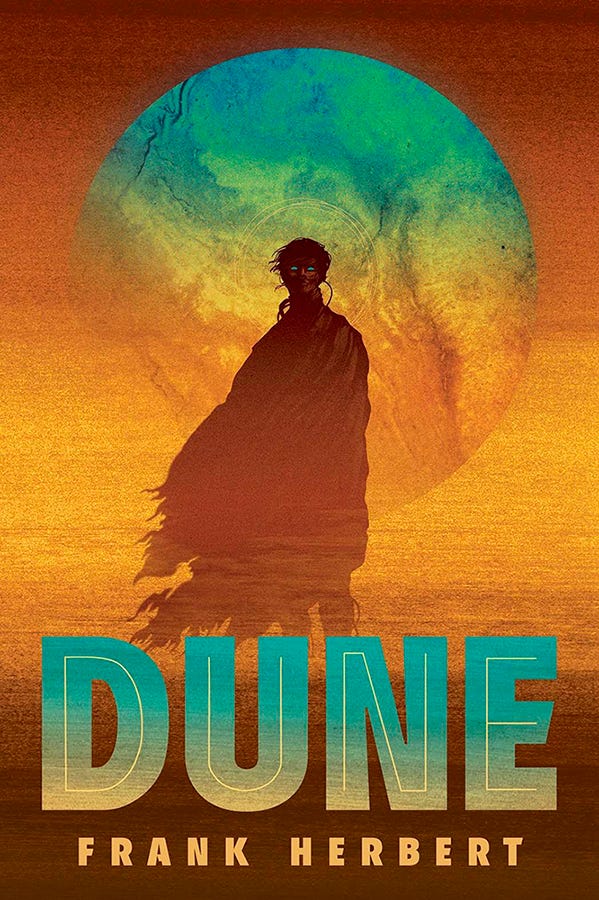
Sprawling Epic #2. I’m referring to the whole series, or at least the original sextalogy.
In 1957, Frank Herbert was dispatched to the seaside town of Florence, Oregon, by Simon & Schuster. He was to write a magazine article about a USDA project using European beach grass to stabilize the shifting sand dunes. The dunes had swallowed entire forests, and threatened local infrastructure. Herbert never finished his article, but was captivated by the sheer scale of the dunes and their ability to consume anything in their path. The concept of a world dominated by sand was born. (This is one of two things Florence is known for; the other being the exploding whale incident.)
Dune is the opposite of The Lord of the Rings in many ways. The Lord of the Rings is set in the distant past, Dune is set in the distant future. Frodo Baggins is a reluctant hero, whereas Paul Atreides is a god-like being as a result of generations of eugenics. While Frodo is a savior, Paul is a warning - he replaces one form of tyranny with another. When a leader is elevated to godhood, the bureaucracy and fanaticism of their followers will drive their movement to extremism, no matter how noble their intentions are.
Hm.
However, the biggest difference between Dune and The Lord of the Rings is symbolism. As mentioned above, Tolkien did intend for his work to be an allegory. Dune, however, is chock full of symbolism. Arrakis is the Middle East. Melange is petroleum. House Atreides and House Harkonnen are the United States and the Soviet Union, respectively (the head of House Harkonnen even has a Russian name, Vladimir). CHOAM? OPEC. The culture of the Fremen is heavily influenced by the Middle East and Islam, “Mau’Dib” sounding suspiciously like “Mahdi,” Islam’s messiah figure. When Paul leads the Fremen in revolt against the Harkonnens, the parallels with T.E. Lawrence are hardly subtle.
The Complete Calvin and Hobbes collection by Bill Watterson
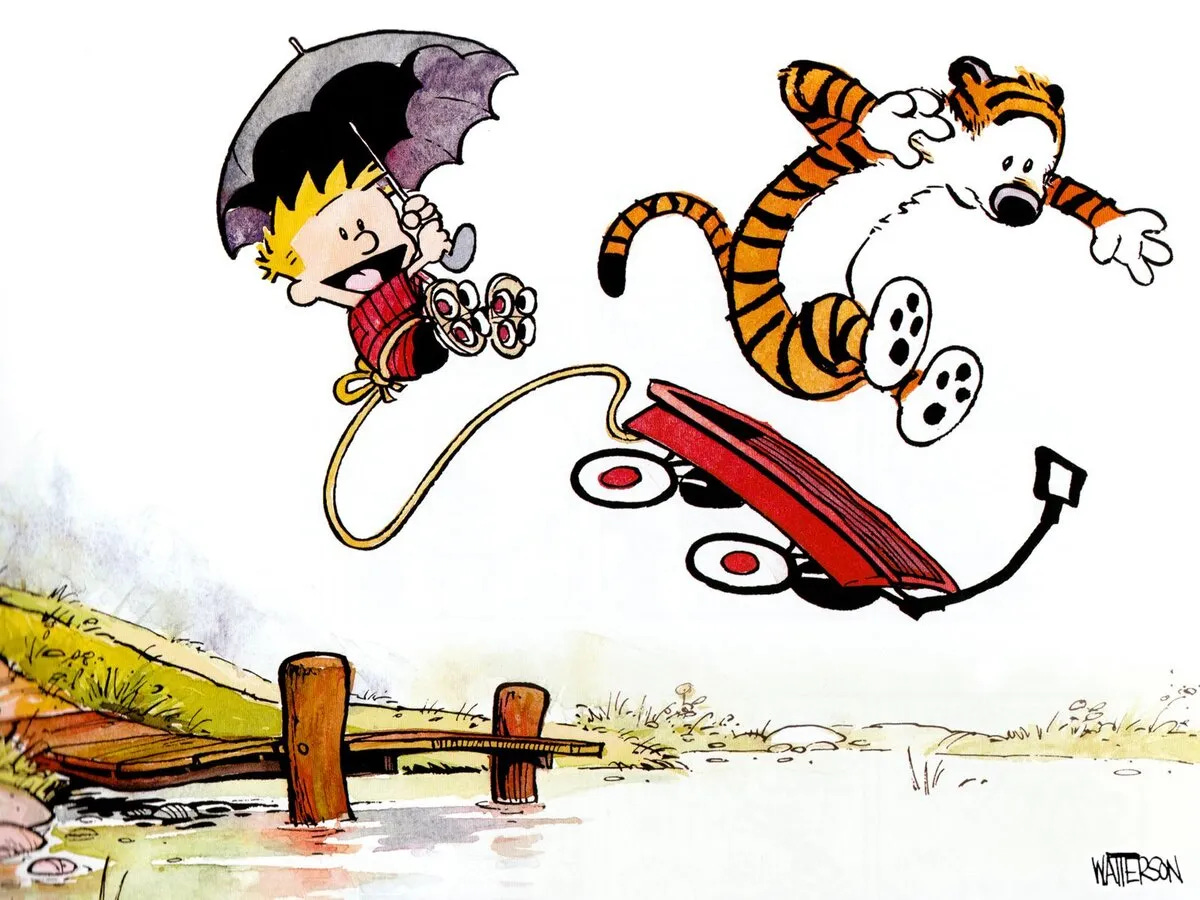
The newspaper comic is one of my favorite mediums, and call me cliché, but Calvin and Hobbes has always been my favorite strip. It will make you laugh. It will make you cry. It will make you pause and think. Along with McManus’ work, it will make you feel like a kid again.
It’s common knowledge that the title characters were named after a pair of philosophers: John Calvin and Thomas Hobbes. The names weren’t intended to have any meaning, other than a“tip of the hat” to the political science department at Watterson’s college. However, there is some significance behind the names. John Calvin believed in predestination, which Calvin would certainly use to excuse his bad behavior. Meanwhile, Hobbes had a dim view of human nature, much like the tiger who bears his name. And yet, in terms of personality, the two are almost swapped. Calvin is far more cynical and pessimistic, whereas Hobbes is more positive and reverent.
Calvin is the embodiment of the duality of childhood. He’s not as innocent as Scout Finch, nor as evil as Eric Cartman. In one strip, he’ll be waxing philosophical about the meaning of life or the nature of God, and he’ll be doing so with the vocabulary of a PhD candidate. In another strip, he’ll be throwing a tantrum over homework or bath-time. One minute he’ll be grieving over a dead raccoon, the next he’ll take sadistic pleasure in soaking Susie with a water balloon. He’s not good or bad, he’s just, well, a kid. A kid doing his best in a somewhat hostile environment.
As I get older, I relate more and more to Calvin’s Dad. Especially now that I work in a school. I tricked my ex-girlfriend once by telling her they drove increasingly heavier trucks over a bridge to test its limit. I knew she was gullible, but I didn’t know she was that gullible.
The Tiger: A True Story of Vengeance and Survival by John Vaillant
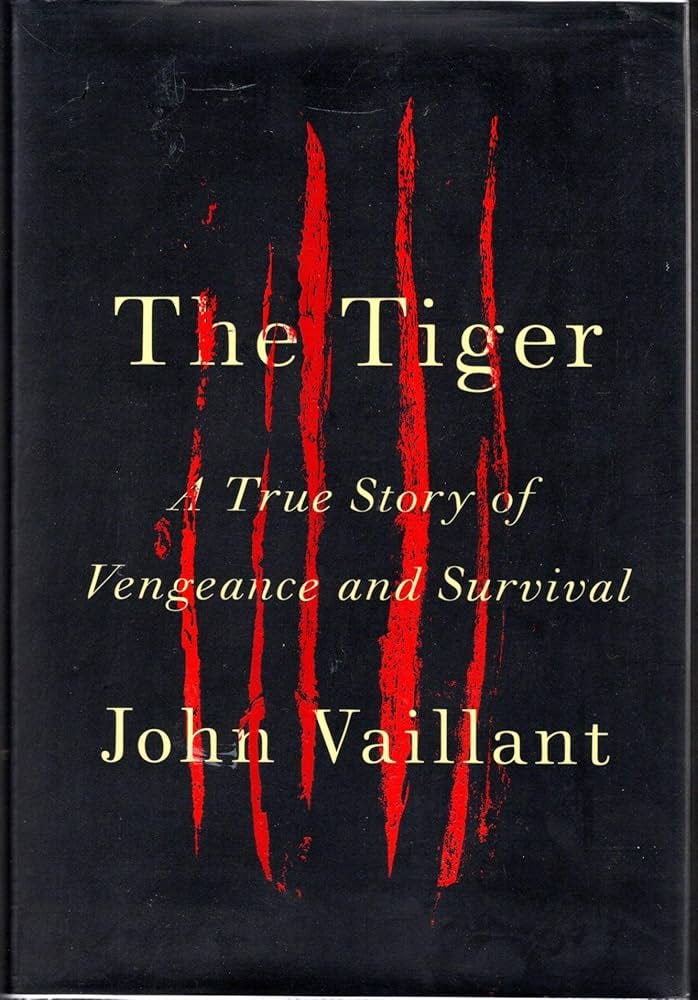
Oh look, it’s another book about a tiger. This one is significantly darker, though. It’s also the only non-fiction book on this list.
The Amur tiger is the world’s largest cat, capable of weighing over 600 pounds and leaping 20 feet in a single bound. Most of them are found in Russia’s Primosrky Krai, on the border with China and North Korea. For centuries, humans and tigers had lived in harmony in this region. But when the Soviet Union collapsed, so did the local economy, forcing many into illegal poaching to survive. And just like that, the centuries-long truce evaporated.
On one fateful night, a poacher named Vladimir Markov wounded a tiger and stole a portion of its kill. The tiger tracked him back to his cabin, destroyed everything that smelled of him, and waited on his doorstep for 12-48 hours until he returned, whereupon the tiger finally did kill him. But the tiger doesn’t stop there: it carries out a series of calculated attacks on the local villagers, resulting in intervention from Inspection Tiger.
Founded in 1994 with support from the Russian government, Inspection Tiger is described as a “wilderness SWAT team.” They have two objectives: apprehend poachers, and act as a “police force” whenever a tiger attack occurs. The local inspection unit is led by Yuri Trush, who is described as physically massive, intensely disciplined, and possessing a deep respect for the tigers he is often forced to euthanize.
What follows is an almost literal game of cat-and-mouse through the taiga, as Inspection Tiger tries desperately to locate the rogue tiger before it attacks again. Ultimately, the tiger is treated not as a monster, but a highly intelligent and traumatized creature that finally decided to fight back against the species killing it.
Blood Meridian by Cormac McCarthy
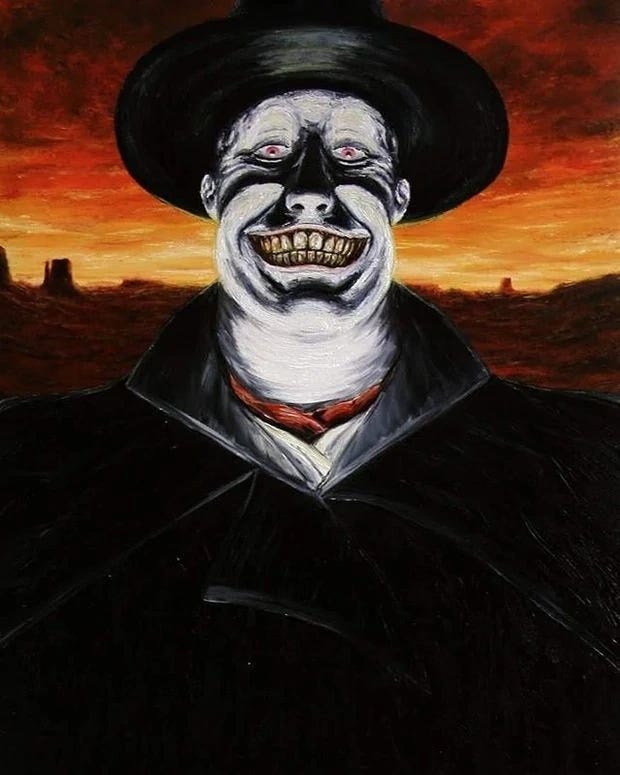
Sprawling Epic #3. The desert is a harsh mistress, so much so that there are two books on this list reminding us just how harsh the desert is.
Blood Meridian is the ultimate deconstruction of the Western. The frontier is place of chaotic nihilism where the only law is “might makes right.” (No different than modern-day Somalia, in other words.) Our protagonist is known only as “the kid,” a nod to the “Man With No Name” trope. However, our protagonist is largely a passive observer to the carnage and depravity of his comrades.
“The kid” might be the protagonist, but the central figure is Judge Holden. Ever since this book was published, Judge Holden has been the benchmark for moral depravity. He is introduced falsely accusing a preacher of pedophilia and bestiality, inciting a lynch mob to destroy his tent and reputation. He later admits that he never met the man and simply sowed chaos to prove he can goad the “civilized” into mindless violence. The Judge’s actions only become more depraved from there, with the most sinister act being the repeated abducting, killing, and implicit rape of children.
The kid and the judge are the only members of the gang to possess a sense of awareness, which makes them adversaries over the course of the story. Although they initially share little interaction, their trajectories become closer and closer as the members of the Glanton Gang slowly dwindle. By the story’s end, the kid and the judge are the only two left, and they finally collide head-on. The ending is rather ambiguous, but what’s certain is that the judge did something horrible to the kid. The book ends with the judge dancing in the buff, boasting that he will never die. The epilogue is even more ambiguous, depicting a lone man digging holes in the desert.
The most common interpretation of the ending is that the holes are for fence posts or telegraph poles. This signals the closing of the frontier and the arrival of civilization - or, more significantly, the end of the Judge’s playground, and a glimmer of hope for humanity. Thomas Hobbes would argue that Judge Holden and the Glanton Gang are what happens in the absence of a social contract, and that the taming of the West is necessary to prevent such nightmarish violence.
So there you have it folks. My cabin reading list. Which I suppose is just my normal reading list. Make your judgements as you will.
A cabin in the woods sounds dreamy and something I think about more and more the older I get. I grew up in Utah and miss the mountains. The way you blended each section drew me right in.
I really loved this piece HVR recommended you so glad to be a part of your journey